Sandoval Lake - Tour Operator

Sandoval Lake - Tour Operator
Sandoval lake reserve, tambopata tours, manu national park
Mostrando entradas con la etiqueta tambopata. Mostrar todas las entradas

viernes, 7 de agosto de 2015

PRINCIPAL ATTRACTIONS SANDOVAL LAKE

Exuberant is the word that describes Madre de Dios with its infinite forests, sinuous rivers that rush towards the ocean, and life abounding in all its corners. Puerto Maldonado, the capital city, is an obligatory stop along the way to gain entrance to the national parks and reserves located in the area, and it has been, at certain moments, an important exporting site for rubber, wood, gold, and petroleum. At present, two of the main economic activities there are eco-tourism and chestnut harvesting

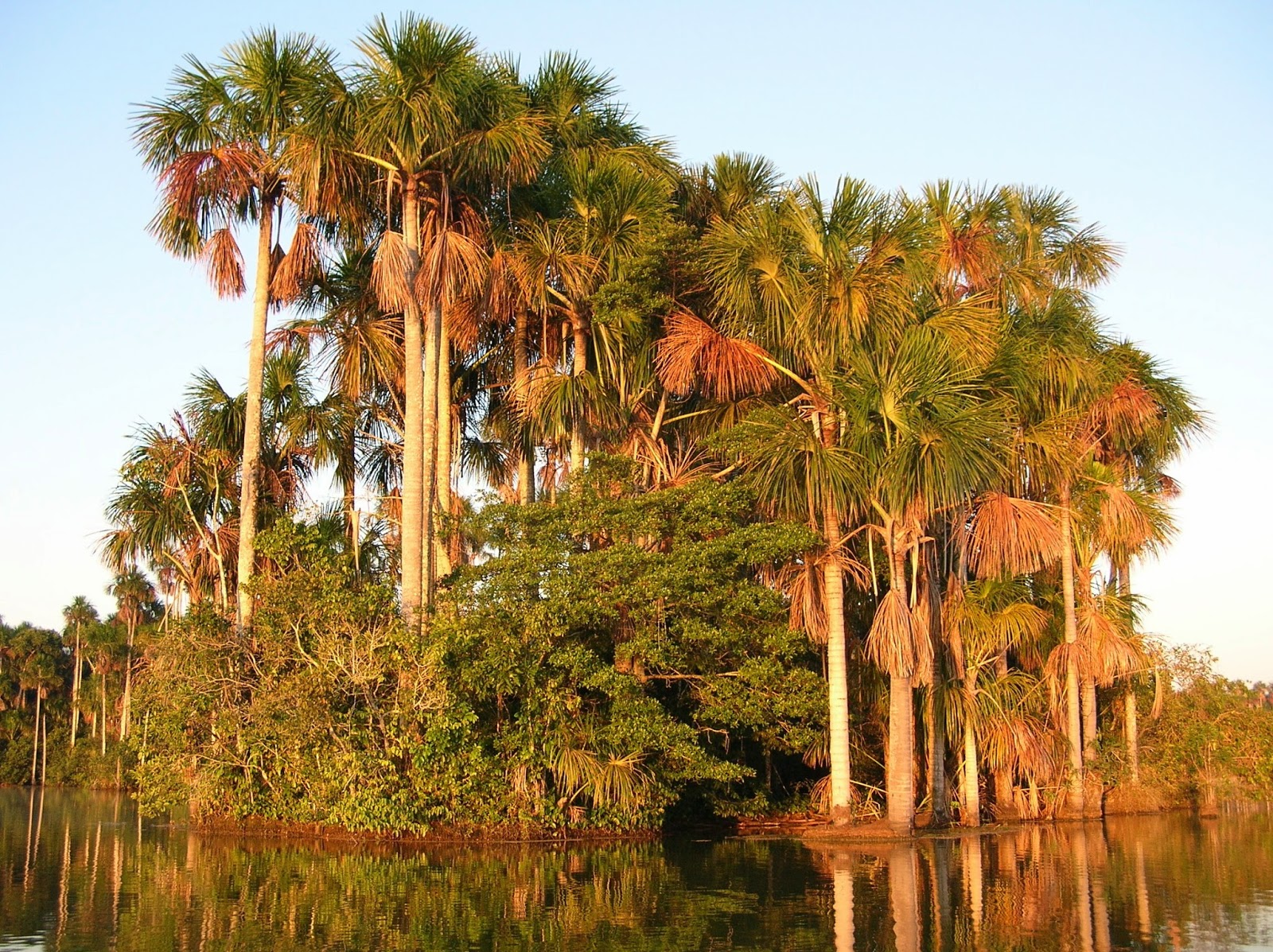
At only ten kilometers from Puerto Maldonado, or a one and half hour hike, you find Lake Sandoval, bordered by aguajales (swampy areas full of palm trees), orchids, kapok trees, caoba trees, and Mauritanian palm trees that grow up to thirty meters tall. The lake is also the home for a large variety of species such as toucans, macaws, parrots, egrets, tapirs, turtles, and the refuge for river otters and black caimans, two species on the brink of extinction. In the areas around Lake Valencia, 60 kilometers from Puerto Maldonado by the Madre de Dios River, there are several indigenous communities where the people make their living from fishing for tiger shovelnose catfish, gilded catfish, and paiche; this area is the habitat for plenty of flora and fauna, too.

COLlPA DE GUACAMAYOS DE COLORADO - SANDOVAL LAKE

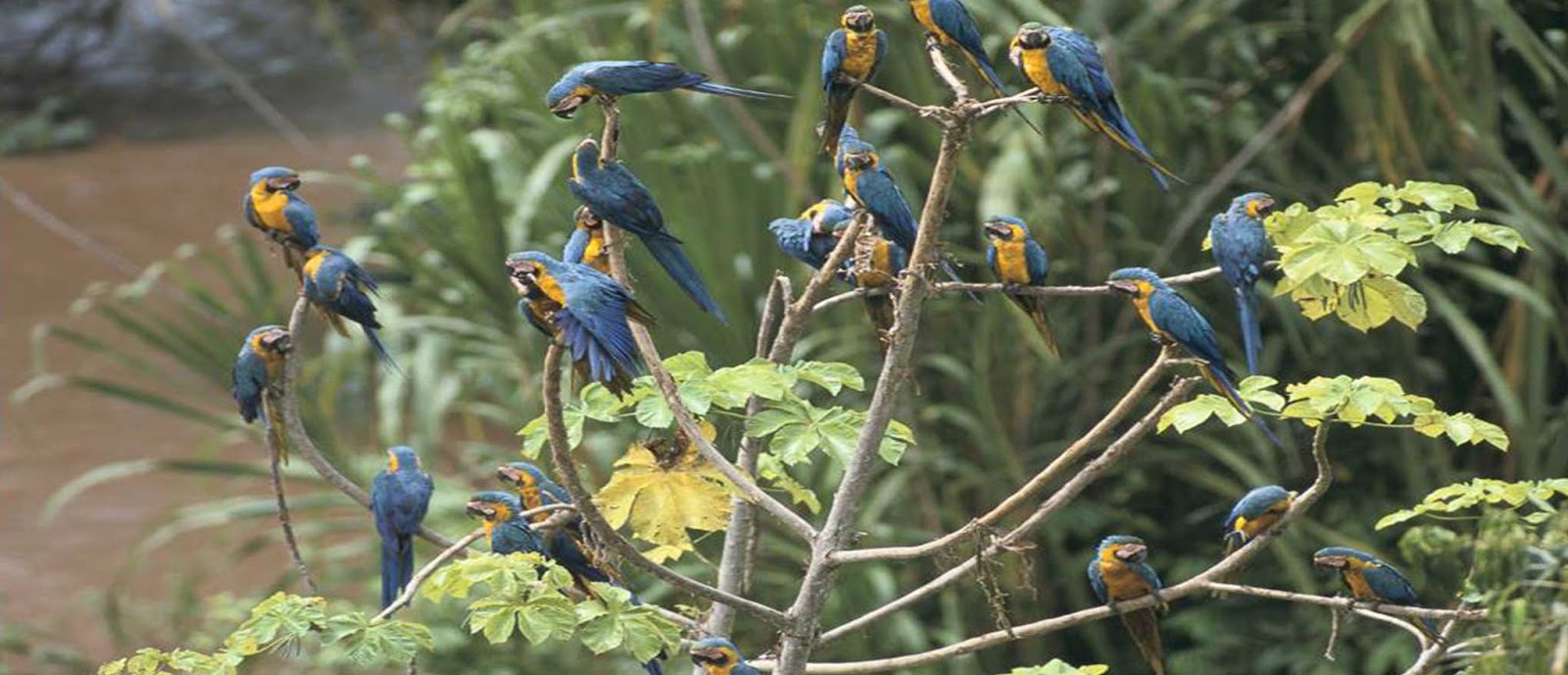
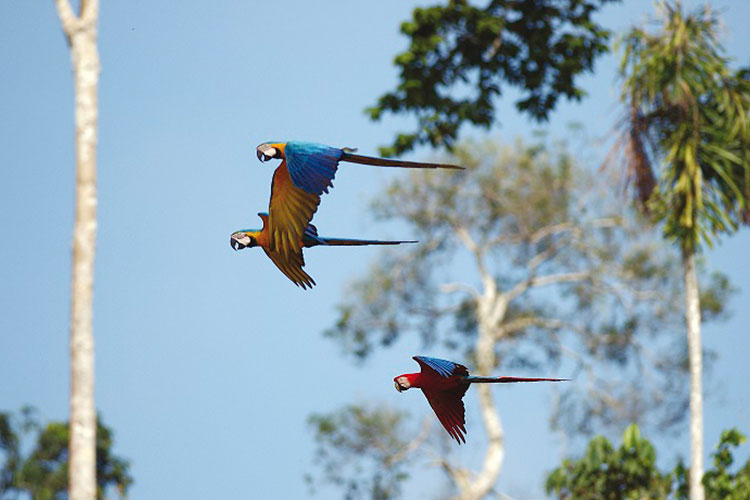
Inside the Tambopata National Reserve and 150 km / 93 miles from Puerto Maldonado (12 hours by boat) The “collpa” (macaw clay lick) is a place where macaws congregate, formed along the shores of the river due to certain erosion processes that allowed the formation of soil rich in mineral salts. It is approximately 50 meters / 164 feet high, 500 meters / 1640 feet long, and is considered the largest in the Peruvian Amazon Rainforest. Every morning, six different species of macaws, parrots, and parakeets gather there. These colorful birds fly around the colpa before starting the “colpeo”, which consists in eating the clay found on the cliff and serves as a nutritional supplement. After staying there from twenty-five to thirty minutes, they fly away to come back the next day. Occasionally, Brazilian tapirs, capybaras, and squirrels go there. At the top of the trees, different species of monkeys like the red howler, the caupuchin, the titi, and sometimes even spider monkeys can be seen.
SANDOVAL LAKE:

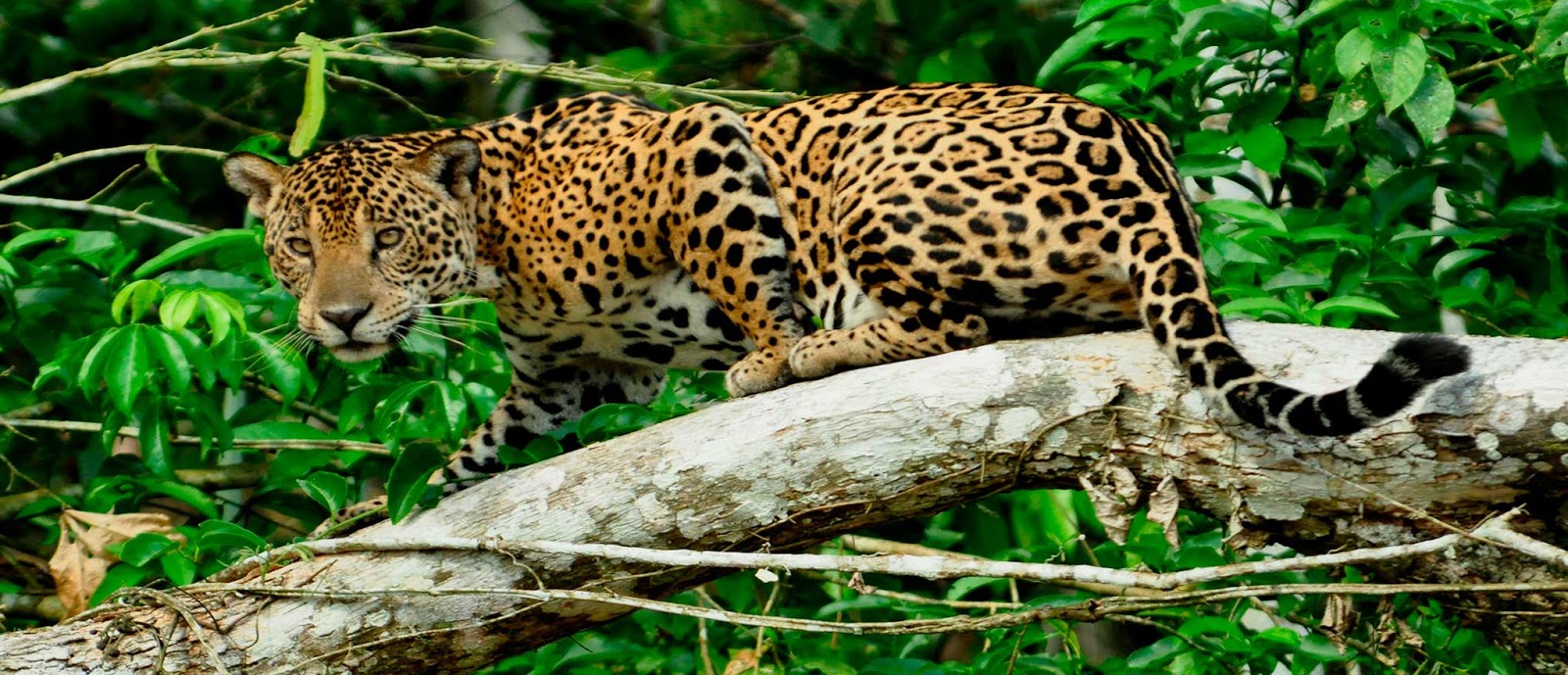
Sandoval lake 10 km / 6 miles from Puerto Maldonado (25 minutes by a 55 HP boat). To reach the lake, you must walk 5 km / 3 miles from the shore of the river to the interior (1 hour and 30 minutes) It is approximately 3 km / 2 miles long, 1 km / 0,6 miles wide, and 0.5 centimeters / 0,1 inches to 3 meters / 10 feet deep. The water remains at an average temperature of 26ºC (79.8ºF), and a huge amount of fish live there. It is surrounded by aguajales, swampy areas where, among other exotic species, a native palm tree called aguaje grows. Along with the local vegetation, you can see orchids, wild plantains, and milpesos palms, giant kapoks, mahoganys, and 30 meter / 98 feet aguaje palm trees. In this habitat lives a great variety of birds, like cormorants, toucans, macaws, parrots, horned screamers, and herons. In addition, there is a colorful variety of wild hens called hoatzin or shansho whish heads are topped with feathers. With some luck, tapirs, turtles, and giant otters or “river wolves” can be seen as well as different species of crocodiles, like the black caiman.

VALENCIA LAKE:

Valencia Lake 60 km / 37 miles from Puerto Maldonado (4 hours by 55 HP boat) The lake is 15 km / 9 miles long, 800 meters / 2625< feet wide, and between 0,5 and 15 meter / 1,6 and 49 feet deep, and thanks to its trees and fish, it is considered a privileged spot.] Around the lake, there are trees like the pumaquiro, the quinilla, the cedar, the giant kapok, the dwarf fan palm tree, and the Brazil nut tree. Among its animal life, the more exotic are bearded guans, turtles (charapas and big headed motelos), crocodiles, monkeys, cormorants, and herons. The wealth of its waters allows both the Huarayos natives and the settlers of its surrounding areas to make a living from fishing for tiger shovelnose catfish, palometas, gilded catfish, piranhas, and paiches. These last ones, though, are not a native species but were brought to the lake. Along with fishing, another important economic activity is the collection of Brazil nuts.
BAHUAJA-SONENE NATIONAL PARK:

Manu Park 90 km / 56 miles from Puerto Maldonado (4 to 5 hours in a 55 HP boat). This national park was established in order to protect the only tropical humid savanna that exists in Peru. The park is located between the Madre de Dios and Puno departments in the provinces of Tambopata, Carabaya, and Sandia. It has an area of 1’091.416 hectares, and part of it is in Bolivia. The most important animals that can be found there are the maned wolf, the marsh deer, the giant anteater, the river wolf or giant otter, the bush dog, the black caiman and the harpy eagle.

TAMBOPATA NATIONAL RESERVE:

Tambopata 45 km / 28 miles south of Puerto Maldonado (2 hours by motorboat). There is also an alternative route: 25 km / 16 miles by land (by 4x4 vehicle) to the community of Infierno and then a river crossing to the reserve (2 hours by 55 HP motor boat) Located between the basins of the Tambopata and Heath Rivers, the reserve covers an area of 274.690 hectares and is found in both the Madre de Dios and Puno departments. The wealth of its biodiversity is immeasurable, and scientist have already registered 632 bird species, 1200 butterfly species, 169 mammal species, 205 fish species, 103 amphibian species, and 67 reptile species. The vegetation is typical of tropical regions. To enter the reserve, prior authorization from INRENA is required.


Tambopata Reserve Special

We had exellent wheater conditions for the whole trip with Sandoval Lake - Peru Birding Tours along Tambopata reserve.

Our first Destination was Sandoval Lake Lodge, we have seen great species around this particular hábitat and Amazing Lake: Agami Heron, Grayish Mourner, Sirystes, Bamboo Antshrike, Silvered Antbird and many more... Then our next destination was Puerto Maldonado for the biggest Macaw Clay Lick located at only 4 hours from the city. Puerto Maldonado surrounding: White-Throated Jacamar, Purus Jacamar, Brazilian Teal, striped Cuckoo, Rusty-Backed Antwren, White-bearded Manakin, Crested, Harpy Eagle Nest and many more!. For the last part of the trip we had spent 5 full days in Sandoval Lake Lodge. The Historical Lodge and its forest itself for exellent birding: This place has such as great forest diversity for amazonian species, Parrot Clay Lick, canopy tower and the Sandoval Lake!

Walking trees, ants that bite, fruit plants that heal and painting. In the jungle of Tambopata children discover a world that seems fiction, but it's real. A trip to the jungle of Tambopata will make them feel and understand the true meaning of that word that Maria Helena Tord seems so abstract: nature.

DISCOVER TOURS DESIGNED FOR CHILDREN IN THE JUNGLE TAMBOPATA, one of the last WILDLIFE REFUGE PLANET WHERE THE MAIN HOST IS THE NATURE. AN ADVENTURE TO REMEMBER LIFE.

Taricayas unforgettable turtles in the lake Sandoval. Small know first how the planet works and what is the perfect harmony and fullness of life, seen from a tiny ant farmer who patiently carries a piece of sheet up to a huge alligator fighting for its survival in the waters Tambopata River.

One of the best gifts you can give your child when the child is take to know the jungle. This universe becomes the best amusement park Younger open 24 hours a playground and a place where life is found at every turn, a real, green world. A trip to Tambopata is the best kind of life, where children become aware forever the real importance of preserving and conserving our environment. Tambopata jungle is one of the best destinations for enjoying implemented Forest with all amenities and also has special activities designed for the youngest in the Tambopata Reserve.


THE UNIVERSE OF LAKES - LAKE SANDOVAL - LAKE OF MOTHER OF GOD - TAMBOPATA LAKE - LAKE PARK MANU

The most beautiful landscapes are hidden Tambopata lakes. One of the most accessible is Lake Sandoval. To get there you need to cross the Madre de Dios River toward the entrance to the nature reserve. From there the hike takes about two hours at a good pace, so the tour is for children over five years. As in many of the destinations in the jungle, the best is the way.

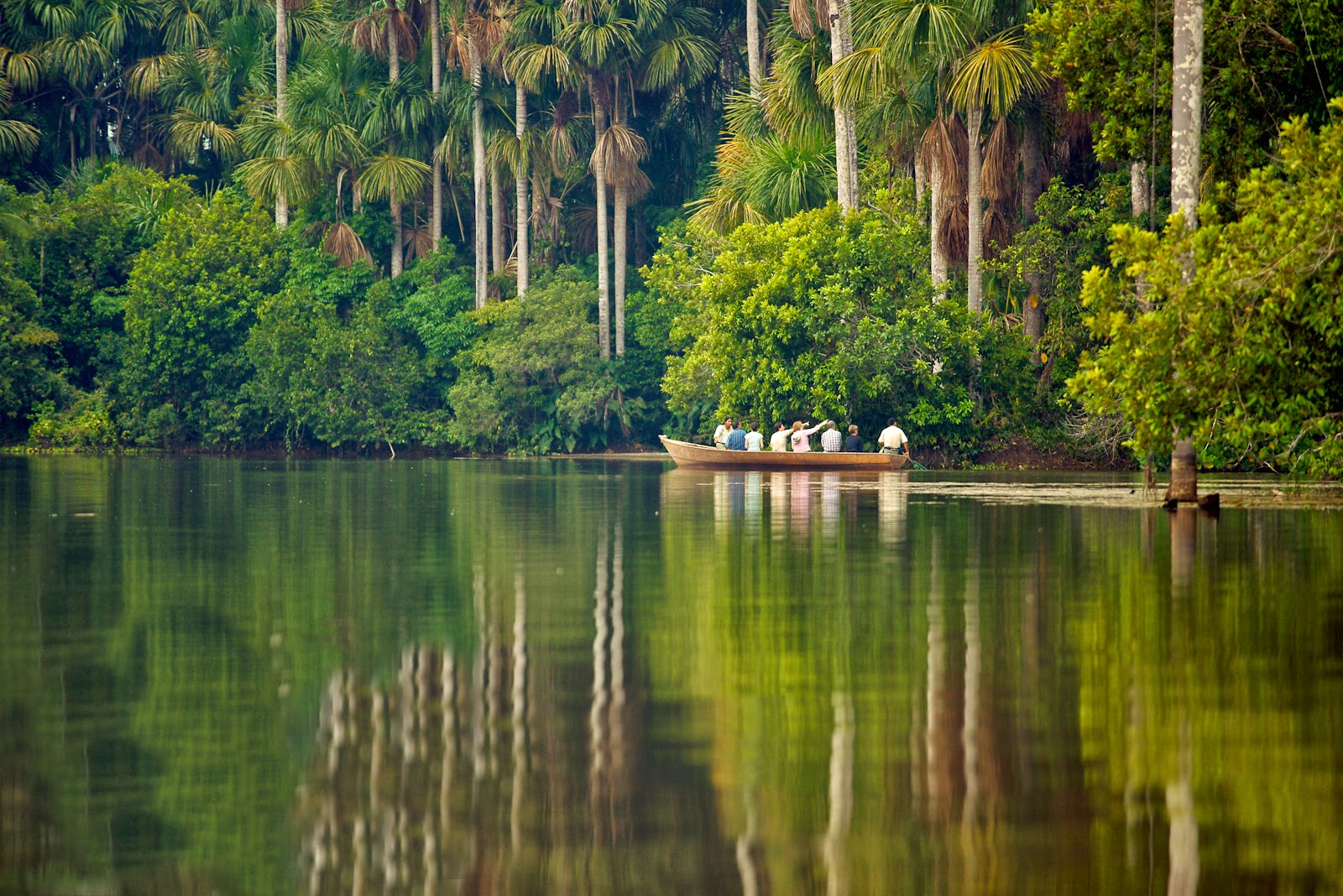
On the way to the lake, the forest gives us many surprises: Butterflies colors, mischievous monkeys friars and, if lucky, sloths. At the end of road a huge lake surrounded by palm trees reflected in the waters opens. This place is the refuge of spectacular endemic birds, typical of this particular habitat, and otters. Be sure to bring binoculars, sunscreen, lots water and a hat. It is preferable to make this visit in the afternoon, when the heat is not so intense (consider the canoe in which he will no roof).


viernes, 3 de abril de 2015

The macaw clay licks: Treasures of the Tambopata - Lake Sandoval

At dawn, the first rays of sunlight illuminate the forest of the Tambopata - Candamo and Bahuaja-Sonene National Park in the southeast corner of Peru. Spread the thick mist floating over the Tambopata River. I watch intently as the clay cliffs on the banks of the river appear slowly. I'm trying to spot any sign of life. Suddenly, I hear a familiar sound by fog, the distinct call of a blue and yellow macaw. The activity of the day has begun.

A typical walk through the pristine forest surrounding the Tambopata River reveals an astonishing collection of living creatures, giant ceiba a gregarious and noisy monkeys and toucans huanganas stale. The jungle contains many hidden treasures, but our research focuses on one of his most renowned inhabitants: collpas bright and bustling macaws. More than ten years since the Macaw Project has investigated a variety of questions about the ecology and reproduction of macaws, and the answers have a very serious impact on the conservation of the forests of South America.

The population of large macaws are in danger for several reasons. To the forbidden hunters like macaws for its beautiful plumage and its value on the black market trade in pets. An even more imminent threat macaws face is deforestation. These birds nest in hollow trees emerging. Huge trees require centuries to grow to its full height and as a result, the places where the macaws can be found nests are naturally rare. Even other loggers cut only large trees and other vegetation left, are destroying nearly all potential nests. 

Exacerbates this Problem low reproductive rate of the birds. If one chick survives three months, when approaching adult size, have few predators and can live almost 60 years. During the first stage, however, the chicks are very vulnerable. Because parasites, predators and malnutrition, only 60 percent of the nests produce a calf every year. Therefore, it is possible that a population of 200 macaw clay licks produce only eight chicks in one year. To help the player performance, project researchers are building, hanging, and observing artificial nests that can use wild macaws.

Researchers have added 16 artificial nests at 17 natural that already discovered around the Tambopata Research Center. We visited each of these nests regularly during the breeding season (November to March). It is quite difficult to check the nests. We have to climb over 30 meters using a rope and jumars system. The perched offer us breathtaking views of the canopy, but there are many dangers above ground, even poisonous snakes, angry bees and adults macaws brave. When the chicks are hatched, we return every day to measure and calculate their growth.


The pichoncitos starve with frequency because of the strong competition with his older brothers for obtain food. During the nineties, 34 pigeons in danger of death were rescued and raised by researchers at the station. Some of these birds could leave your artificial to integrate with wild flock under, but others (the researchers dubbed boys) still visit the table in the dining room looking for easy meal. To avoid this problem, now down to pigeons they lack enough food, we provide you extra food and return them to their nests.


Despite our intervention, we have generally not increased rate survival. Although we had not been able to save the disadvantaged young, we encourage data success of artificial nests compared to natural jungle. It seems that nests built by men offer them an acceptable alternative macaws and could serve as an effective conservation strategy for populations of endangered macaws in the continent.


The habitat of the macaw clay licks spans all tropic areas of the western hemisphere, but Tambopata is the best region to study. The reason is the Colpa, the largest worldwide. The birds love to eat clay and every day thousands of parrots and macaws come down to consume the earth. This behavior occure in many species of animals and ornithologists have developed several theories to explain in birds. Some say that clay is combined with toxic substances, and allows macaws digest poisonous seeds that are its power. In the Tambopata Reserve, macaws prefer the saline land and is likely to use clay consumption to address the lack of sodium in their natural diet in the Peruvian jungle.


Whatever happens, this great assembly of colors and exotic sounds is absolutely amazing. As a researcher on the project, I witness this wonderful exhibition every morning. We use binoculars and telescopes to record the first arrivals of birds, where they go, and how long they stay on the lick in an effort to understand the complex interactions between all species. We also want to determine the impact of weather and tourism in the lick. Initial results show that birds do not visit the clay during rainy days and tourism controlled at a distance at least 150 meters does not disrupt normal behavior. In the afternoon, we go to the forest to conduct censuses Psittacidae. Census data provide us with information about the movement and behavior of parrots and macaw clay lick off. If we learn more about birds and their habits, will be easier to keep them in the Peruvian jungle.


I'm hanging 35 meters above the floor and the breeze sways me as I look Fixed the river. The immense forest extends out of sight. The sun disappears behind the Andes mountains on the western horizon. A macaw escarlato lands on a nearby branch. He came to look for their children that I just measure and return to their nest. I am relieved to find out that the beautiful bird is successfully raising a new generation of macaws. With our help, the skies above the lick still be full of colors and sounds spectacular. Another research journey comes to an end, but the hard work will never end. Life on the reservation deTambopata continue tomorrow as it has done every day. It is our duty to ensure that the macaws and other jungle animals always have a place to call home.


View macaw clay licks: Treasures of the Tambopata - Lake Sandoval Full Day


martes, 31 de marzo de 2015

Sandoval Lake Lodge

SANDOVAL LAKE LODGE
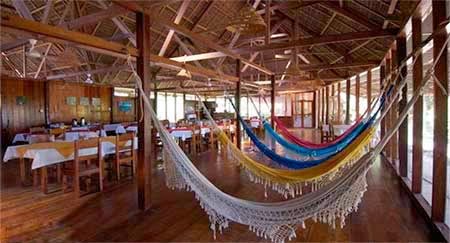
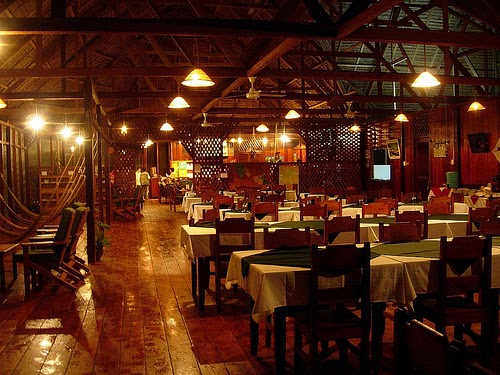
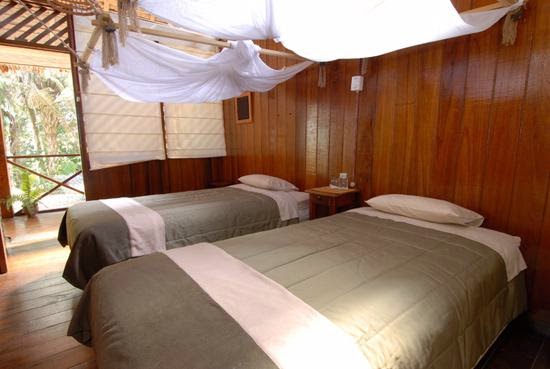
Extend your program deep in Peru’s Tambopata National Reserve. Sandoval Lake Lodge overlooks sparkling, palm- rimmed Sandoval Lake, the most beautiful and wildlife-rich of all lakes in Tambopata-Madidi.This privileged location provides exclusive access to the lake in the early morning and late afternoon, the choice hours for wildlife viewing and photography.


• Extend your stay at Sandoval Lake Lodge, located in Tambopata National Reserve.

• Excellent opportunities for wildlife viewing, bird watching, and photography in Sandoval Lake .

• See resident Giant River Otters in their natural habitat in Sandoval Lake .

• Observe hundreds of Red-bellied and Blue-and-yellow Macaws in Sandoval Lake.

• Hike through the Amazon jungle Sandoval Lake .

• Enjoy exclusive access to Lake Sandoval Lodge .
TAMBOPATA SANDOVAL LAKE

For those with limited time but still wanting to experience a rich and remarkable section of the Amazon Rainforest the beautiful Sandoval Lake Lodge in the lower section of the Tambopata National Reserve is an excellent choice. Here we present an extended version of our 4,3,2 Days day itinerary with a highly recommended extra day to make the most of this wildlife rich rainforest environment. This lodge is easily accessible from the friendly and fascinating jungle town of Puerto Maldonado,
a major centre of the timber, gold mining and eco-tourism industries in the Southern Peruvian Amazon Sandoval Lake Lodge Puerto Maldonado is itself easily accessed from Lima and Cusco due to excellent local air links. From Puerto Maldonado our lodge is approximately 3 hours away and the journey – a thirty minute boat ride, followed by a short jungle hike and finally a paddle to our jungle home by catamaran or canoe  - is fascinating in itself. Lago Sandoval is an ox-bow lake, a curve of the Madre de Dios River cut off by the river changing course. These quiet and beautiful habitats are wonderful places for wildlife watching, 

whether exploring the Tambopata National Reserve Sandoval lake in silence by catamaran or canoe , with only the sound of our craft’s paddles for company, or walking trails with experienced nature guides through diverse forest habitats. Notable wildlife making its home around Lake Sandoval includes Red-Bellied Macaws, 5 species of monkeys, Black Caimans – largest of the alligator like caiman species found the Amazon and growing sometimes to a maximum length of 6m, and the beautiful and highly endangered Giant Otter. Giant Otters, the largest of their kind worldwide live and hunt in large family groups and grow to a maximum

length of 2m. Local people call the Otters ‘Lobos del Rio’ – Wolves of the River in honor of their co-operative hunting abilities. To see these animals hunting freely in their natural habitat is truly a magical experience! Welcome to the Jungle Sandoval Lake